

 Over the past year, the global metal packaging industry has entered a new phase.
The discussion is no longer simply about aluminum versus tinplate, or two-piece cans versus three-piece cans. Instead, brand owners, food processors, and beverage manufacturers are increasingly evaluating packaging through four strategic lenses:
• Supply Chain Security
• Sustainability Compliance
• Product Protection
• Consumer Convenience
According to multiple industry forecasts, the global metal packaging market is expected to continue growing through the next decade, driven by food security concerns, beverage consumption, circular economy initiatives, and demand for longer shelf life. Beverage cans remain a major growth engine, while food cans continue to hold a critical position in global food preservation and distribution.
Several packaging categories are attracting particular attention in international markets:
▶ Aluminum Cans
The growth of energy drinks, RTD cocktails, beer, sparkling water, and functional beverages continues to drive demand for aluminum cans. Lightweighting, recyclability, digital printing, and resealable concepts are becoming key development directions for manufacturers.
▶ Tinplate 2-Piece & 3-Piece Cans
Despite the rapid growth of aluminum packaging, tinplate remains the dominant solution for canned seafood, fruits, vegetables, pet food, and ready-to-eat meals. Excellent barrier properties, retort resistance, and long shelf life continue to make steel packaging indispensable for food applications.
▶ Easy Open Ends (EOE) & Easy Peel Ends
Convenience has become a purchasing factor rather than a value-added feature. More food brands are integrating easy-open solutions to improve consumer experience while maintaining product safety.
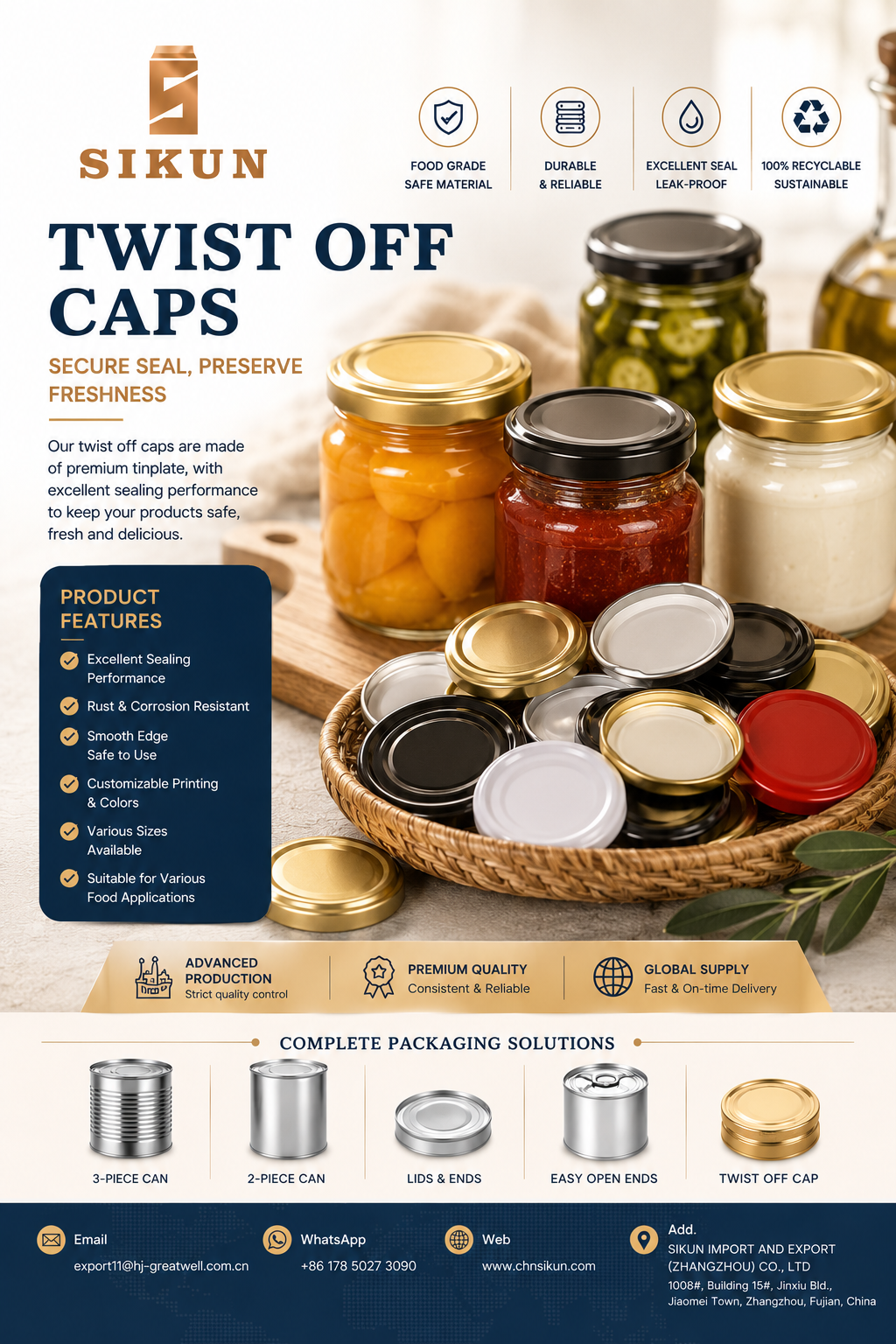
▶ Twist-Off Caps & Lug Caps
As exports of sauces, jams, pickled products, baby food, and premium food products expand globally, reliable vacuum sealing and closure performance are becoming increasingly important for brand protection and shelf-life stability.
What is particularly interesting is that packaging innovation today is less about creating completely new formats and more about improving efficiency, recyclability, compliance, traceability, and manufacturing performance. This shift is being observed across the global metal packaging value chain.
At the same time, the industry faces several challenges:
• Volatility in steel and aluminum prices
• Trade barriers and tariff uncertainties
• Stricter sustainability regulations
• Pressure to reduce material weight without compromising performance
• Growing demand for transparent recycling systems
From my perspective, the companies that will lead the next decade are not necessarily those offering the lowest packaging cost.
They will be the companies capable of delivering a complete packaging solution—including cans, easy open ends, closures, technical support, quality assurance, and regulatory compliance.
Packaging is no longer just a container.
It has become part of a brand’s supply chain strategy.
What do you believe will be the biggest driver of metal packaging growth between 2026 and 2030?
Post time: Jul-29-2026