

In today’s global food trade, quality and safety are no longer optional—they are essential requirements for sustainable business growth and long-term partnerships. As international markets continue to expand and consumer awareness increases, food safety standards have become a key benchmark for evaluating suppliers. Within this environment, canned food products stand out for their stability, long shelf life, and reliability, provided they are produced under strict and well-managed quality control systems.
All canned products are produced under strict quality control systems to meet international food safety standards, ensuring that every stage of production—from raw material selection to final shipment—complies with globally recognized requirements. This commitment to quality not only protects consumers but also strengthens confidence among importers, distributors, and retailers worldwide.
Quality Control Begins with Raw Material Selection
The foundation of safe and high-quality canned food lies in the careful selection of raw materials. Only qualified raw materials sourced are accepted for production. Vegetables, fruits, beans, mushrooms, and fish used in canned food processing are inspected upon arrival to ensure freshness, appropriate maturity, and compliance with food safety specifications.
Incoming raw materials are checked for appearance, smell, size, and overall condition. Any materials that fail to meet internal standards are rejected before entering the production line. This strict control at the initial stage helps prevent potential quality risks and ensures that only suitable ingredients are used for further processing.
Standardized Production Processes Ensure Product Safety
Once raw materials pass inspection, production begins under standardized and controlled conditions. Canned food processing follows clearly defined operating procedures that cover washing, sorting, cutting, blanching, filling, sealing, sterilization, and cooling.
Each step is carefully monitored to ensure consistency and safety. For example, washing and sorting remove impurities and foreign materials, while precise filling and sealing ensure accurate net weight and proper can integrity. Sterilization, one of the most critical steps in canned food production, is conducted under strictly controlled time and temperature conditions to eliminate harmful microorganisms and guarantee product safety throughout the shelf life.
Production records are maintained at every stage, allowing full traceability of each batch. This systematic approach ensures that any potential issues can be quickly identified and addressed, minimizing risk and maintaining high standards.
Advanced Equipment and Controlled Environment
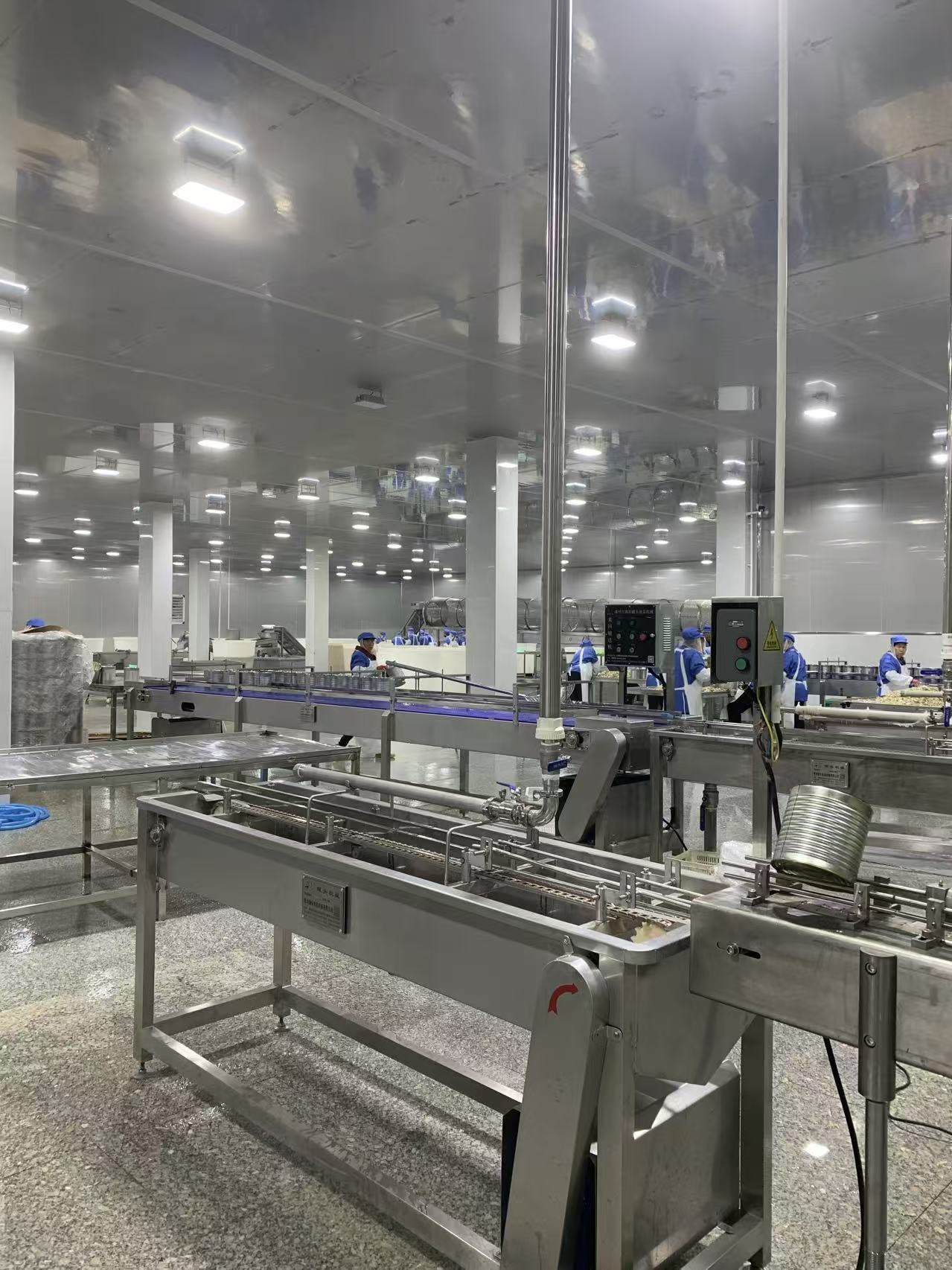
Modern production facilities are equipped with advanced machinery designed specifically for canned food processing. Automated systems help reduce human error, improve efficiency, and maintain consistent quality. Equipment is regularly inspected, calibrated, and maintained to ensure stable performance and compliance with food safety requirements.
The production environment is also strictly controlled. Processing areas are designed to meet hygiene standards, with clear separation between raw material handling zones and finished product areas. Cleaning and sanitation procedures are carried out according to scheduled plans, reducing the risk of cross-contamination.
Employees working in production areas receive regular training on hygiene practices, operational procedures, and food safety awareness. Personal hygiene requirements, including protective clothing and health checks, are strictly enforced to ensure a safe production environment.
Comprehensive Quality Inspection and Testing
Quality control does not stop at production. Comprehensive inspection and testing procedures are implemented before products are released for shipment. Finished canned products undergo multiple checks, including visual inspection, weight verification, seam inspection, and can integrity testing.
Microbiological testing and laboratory analysis are conducted according to internal quality standards and customer requirements. These tests help verify product safety, stability, and compliance with international regulations. Retained samples are kept for reference, providing additional assurance and traceability.
Through these strict inspection measures, only products that fully meet quality and safety requirements are approved for export.
Compliance with International Food Safety Standards
To meet the diverse requirements of global markets, canned products are produced in compliance with internationally recognized food safety systems. These systems provide a structured framework for identifying and controlling potential hazards throughout the production process.
Compliance with international standards not only ensures product safety but also facilitates smooth market access in different regions. Importers and regulatory authorities rely on these systems as evidence of a supplier’s commitment to quality and compliance.
Regular internal audits and third-party inspections are conducted to verify that quality management systems are effectively implemented and continuously improved. Corrective actions are taken promptly whenever improvement opportunities are identified.
Traceability and Transparency in the Supply Chain
Traceability is a key element of modern food safety management. From raw material sourcing to finished product shipment, all processes are fully documented. Each production batch can be traced back to its origin, including raw materials, production date, and processing conditions.
This level of transparency provides reassurance to customers and regulatory bodies, demonstrating accountability and reliability. In the event of any inquiry or quality concern, traceability systems allow for fast and effective response, protecting both consumers and business partners.
Packaging, Storage, and Transportation Control
Packaging plays a vital role in preserving the quality and safety of canned products. Only food-grade packaging materials that meet international standards are used. Cans, lids, and labels are inspected to ensure durability, proper sealing, and accurate product information.
Finished products are stored in clean, dry warehouses under appropriate conditions to maintain quality before shipment. Inventory management follows the first-in, first-out (FIFO) principle to ensure product freshness.
During transportation, care is taken to protect products from damage and extreme conditions. Proper loading practices and secure packaging help ensure that products arrive at their destination in good condition, maintaining quality throughout the supply chain.
Continuous Improvement and Customer Confidence
Quality control is not a one-time effort but a continuous process. Feedback from customers, market trends, and regulatory updates are carefully reviewed and incorporated into quality management practices. Continuous improvement helps enhance product performance, operational efficiency, and customer satisfaction.
For international buyers, working with a supplier that prioritizes strict quality control means reduced risk, stable supply, and long-term cooperation. Reliable quality builds trust, which is essential in global trade, especially in the food industry where safety and consistency are critical.
Conclusion
All canned products are produced under strict quality control systems to meet international food safety standards, reflecting a strong commitment to product safety, regulatory compliance, and customer satisfaction. From raw material selection and standardized production to final inspection and shipment, every step is carefully managed to ensure reliable quality.
In an increasingly competitive global market, strict quality control is not only a responsibility but also a key competitive advantage. By maintaining high standards and continuously improving processes, canned food producers can confidently serve international markets and build long-lasting partnerships based on trust, safety, and quality.
Post time: Dec-17-2025